
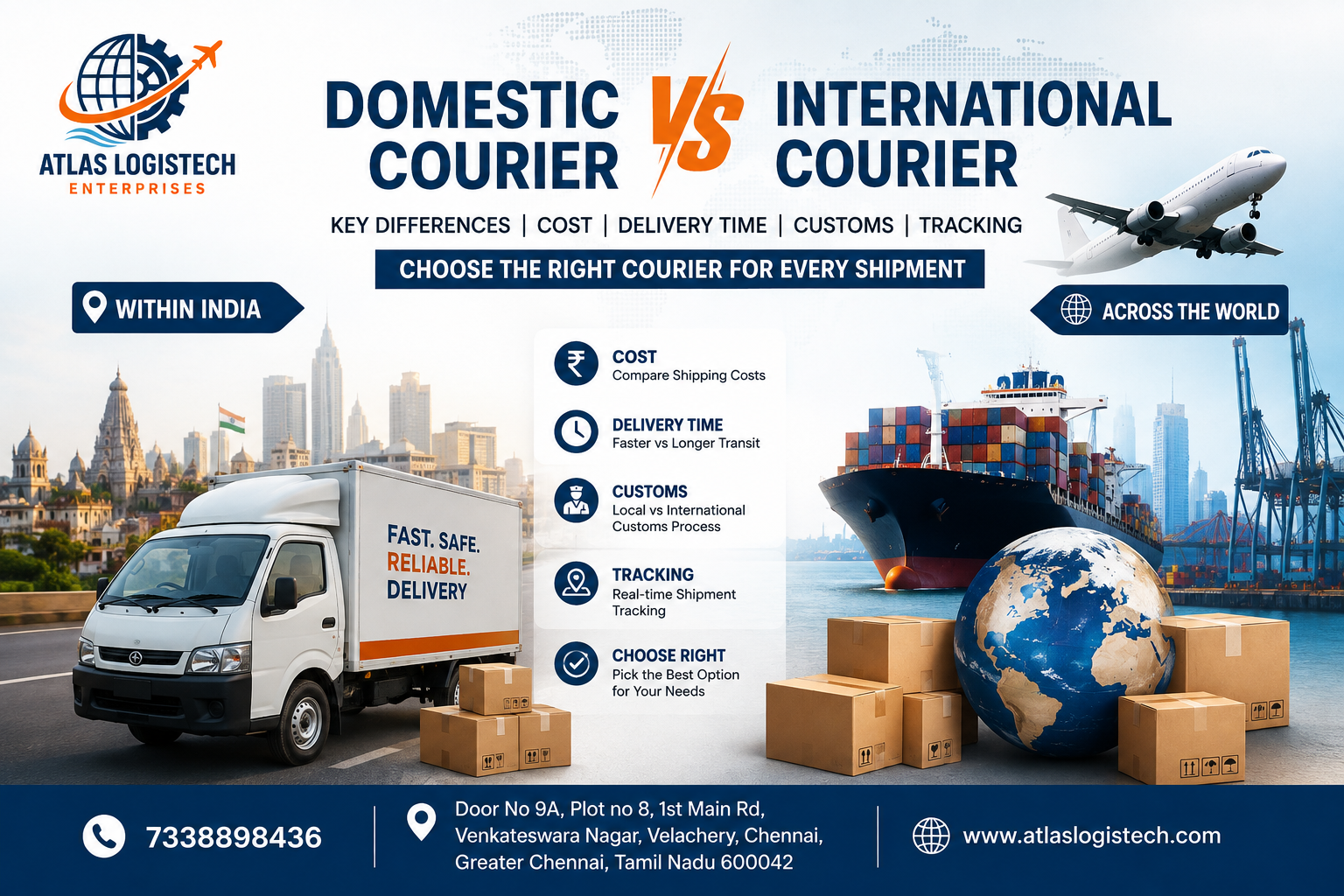
When it comes to sending parcels, documents, or business shipments, choosing between Domestic vs International Courier services is an important decision. While both options are designed to transport packages safely and efficiently, they differ significantly in delivery speed, cost, documentation, customs clearance, and shipping regulations.
Whether you’re an individual sending personal items or a business shipping products to customers, understanding these differences helps you select the right courier service while saving both time and money.
What is a Domestic Courier Service?
A domestic courier service delivers parcels within the same country. These services connect cities, towns, and rural locations through an extensive logistics network.
Domestic courier services are ideal for:
- Business documents
- E-commerce deliveries
- Medical reports
- Gift parcels
- Retail shipments
- Legal documents
Since shipments remain within national borders, they require minimal paperwork and are delivered much faster.
What is an International Courier Service?
International courier services transport parcels from one country to another. These shipments must comply with customs regulations, import/export rules, and international shipping guidelines.
International couriers are commonly used for:
- Overseas business shipments
- Personal packages
- Educational documents
- Product exports
- Medical equipment
- Commercial goods
International deliveries involve multiple transportation modes, customs inspections, and international logistics partners.
Major Differences Between Domestic and International Courier
1. Delivery Time
Domestic courier services usually deliver within 1–5 business days, depending on the destination.
International courier deliveries generally take 3–10 business days or longer based on customs clearance and destination country.
2. Shipping Cost
Domestic courier charges are generally affordable because transportation occurs within a single country.
International shipping costs are higher due to:
- Air freight charges
- Customs processing
- Import duties
- International handling fees
- Fuel surcharges
3. Documentation
Domestic shipments require minimal documentation.
International courier services may require:
- Commercial Invoice
- Packing List
- Customs Declaration
- Export Documentation
- Identity Verification
4. Customs Clearance
Domestic shipments do not go through customs.
International shipments must pass customs inspections before reaching the destination country.
5. Tracking System
Both domestic and international courier services provide real-time tracking.
However, international tracking may include updates from:
- Origin country
- Transit hubs
- Customs department
- Destination country
- Final delivery partner
6. Restricted Items
Domestic courier restrictions are relatively limited.
International courier services have stricter regulations on:
- Food items
- Medicines
- Liquids
- Batteries
- Chemicals
- Hazardous materials
- Certain electronic products
Advantages of Domestic Courier Services
- Faster delivery
- Lower shipping costs
- Easy booking process
- Minimal documentation
- Reliable local delivery network
- Suitable for urgent deliveries
- Convenient doorstep pickup
Advantages of International Courier Services
- Global shipping coverage
- Secure package handling
- Customs support
- Worldwide tracking
- Insurance options
- Business export support
- Multiple delivery choices
Which Courier Service Should You Choose?
Choose a Domestic Courier Service if you:
- Need same-country delivery
- Want affordable shipping
- Require faster delivery
- Have regular local business shipments
Choose an International Courier Service if you:
- Send parcels overseas
- Export products
- Deliver documents internationally
- Need global logistics support
Tips Before Booking Any Courier
- Compare courier charges
- Verify delivery timelines
- Check prohibited items
- Pack shipments securely
- Use shipment insurance for valuable goods
- Keep tracking details safe
- Ensure complete address information
- Verify customs requirements for international shipping
Conclusion
Understanding the differences between Domestic vs International Courier services helps individuals and businesses make informed shipping decisions. Domestic courier services are best for quick, cost-effective deliveries within the country, while international courier services provide reliable global shipping with customs support and worldwide tracking. Choosing the right courier service depends on your destination, budget, delivery urgency, and shipment type. By selecting the appropriate service, you can ensure safe, timely, and hassle-free parcel delivery.
FAQ – Domestic vs International Courier
1. What is the difference between domestic and international courier services?
Domestic courier services deliver parcels within the same country, while international courier services transport shipments across different countries and require customs clearance.
2. Which courier service is faster?
Domestic courier services are generally faster, with deliveries usually completed within 1–5 business days. International courier deliveries may take several days depending on customs procedures and destination.
3. Why is international courier more expensive?
International shipping involves air freight, customs clearance, import duties, international handling, and longer transportation routes, making it more expensive than domestic courier services.
4. Do international courier services require customs documentation?
Yes. International shipments usually require customs declarations, invoices, packing lists, and other supporting documents depending on the destination country.
5. Can I track both domestic and international shipments?
Yes. Most courier companies provide real-time tracking for both domestic and international parcels throughout the delivery process.